


Artificial Intelligence (AI) continues to transform the way we communicate, create content, and interact with technology. One of the most fascinating—and sometimes concerning—developments in recent years is AI voice cloning.
Understanding AI Voice Cloning
AI voice cloning is a technology that uses artificial intelligence to create a digital copy of a person’s voice. By analyzing recordings of someone’s speech, AI can learn the unique characteristics of their voice, including tone, pitch, accent, speaking style, and even emotional expressions.
Once trained, the AI can generate new speech that sounds remarkably similar to the original speaker, even saying words or phrases the person never actually spoke.
How Does It Work?
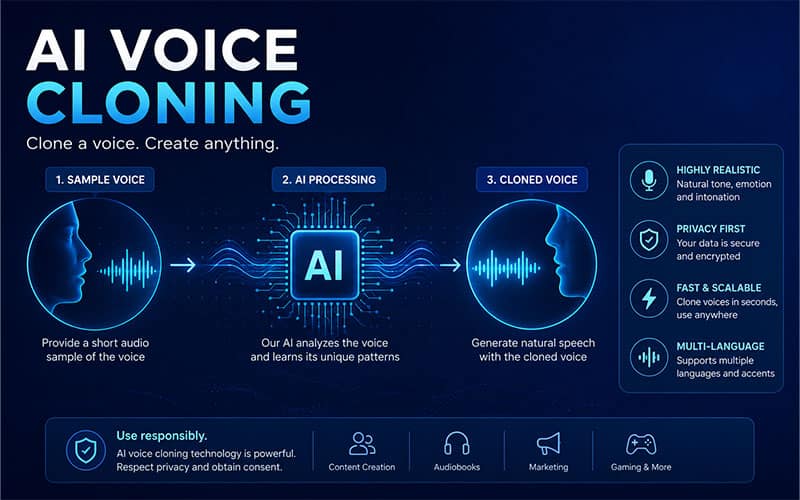
Voice cloning relies on advanced machine learning and deep learning algorithms. The process generally involves three steps:
- Voice Collection – Audio recordings of a person’s voice are gathered.
- AI Training – The AI analyzes patterns within the recordings to understand how the voice sounds.
- Speech Generation – The AI creates new spoken content using the cloned voice.
Some modern AI systems can produce convincing voice clones using only a few minutes of recorded speech.
Positive Uses of AI Voice Cloning
AI voice cloning has many beneficial applications:
Accessibility
People who have lost their ability to speak due to illness or injury can preserve their voice and continue communicating using AI-generated speech.
Content Creation
Podcasters, video creators, and businesses can generate voiceovers quickly without recording every script manually.
Customer Service
Companies can create realistic virtual assistants that provide a more natural customer experience.
Entertainment
Film studios, video game developers, and audiobook publishers can use voice cloning for character voices, narration, and dubbing.
Language Translation
AI can potentially translate speech into another language while maintaining the speaker’s original voice characteristics.
Potential Risks and Concerns
While the technology offers exciting opportunities, it also raises significant concerns.
Scams and Fraud
Criminals can use cloned voices to impersonate family members, business executives, or government officials in attempts to steal money or sensitive information.
Misinformation
AI-generated voices could be used to create fake audio recordings that appear to be from public figures, spreading false information.
Privacy Issues
A person’s voice is a unique part of their identity. Using someone’s voice without permission can create ethical and legal concerns.
Identity Theft
As voice authentication becomes more common, cloned voices may pose risks to security systems that rely on voice recognition.
How to Protect Yourself
To reduce the risk of becoming a victim of AI voice cloning scams:
- Be cautious of urgent phone calls requesting money.
- Verify requests through a secondary method, such as calling the person directly.
- Establish family “safe words” for emergency situations.
- Limit public sharing of long voice recordings when possible.
- Stay informed about emerging AI technologies and scams.
The Future of Voice Cloning
AI voice cloning technology will likely continue improving, becoming more realistic and accessible. As adoption grows, governments, technology companies, and consumers will need to balance innovation with privacy, security, and ethical considerations.
Used responsibly, AI voice cloning has the potential to help millions of people and revolutionize communication. However, understanding both its benefits and risks is essential in a world where hearing a familiar voice may no longer guarantee that the speaker is really who they claim to be.
As AI technology evolves, awareness and education will remain key to safely navigating this rapidly changing digital landscape.