


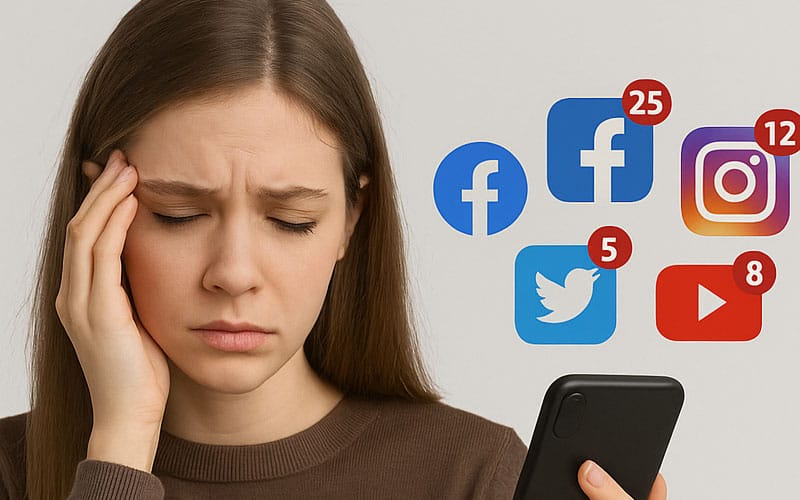
In today’s hyperconnected world, social media has become a major part of daily life—especially for teens and young adults. While these platforms help users stay informed, entertained, and connected, growing evidence shows that excessive social media use may also be fueling anxiety and mental health struggles among younger generations.
The Pressure to Be Perfect
Platforms like Instagram, TikTok, and Snapchat often highlight only the best moments of people’s lives. Constant exposure to filtered photos, luxury lifestyles, and curated “perfect” posts can create unrealistic expectations. For young people still developing their sense of identity and self-worth, this can lead to constant comparison, insecurity, and feelings of inadequacy.
Fear of Missing Out (FOMO)
The endless stream of updates and stories also contributes to what experts call “FOMO”—the fear of missing out. Seeing friends hang out without them or others achieving milestones can trigger stress and loneliness. Over time, this constant cycle of comparison and exclusion can increase anxiety levels.
Sleep and Screen Time
Studies have found that heavy social media use, particularly late at night, disrupts healthy sleep patterns. Lack of rest affects mood regulation and can make anxiety symptoms worse. Notifications, alerts, and the pressure to respond instantly only add to the mental strain.
Cyberbullying and Online Drama
Another growing concern is cyberbullying. Negative comments, harassment, or online “drama” can be devastating for young people. Unlike traditional bullying, the online world follows users everywhere, leaving little escape from digital stress.
Finding Balance
Experts recommend setting screen-time limits, curating positive online spaces, and prioritizing real-world social interactions. Parents, educators, and peers can play a key role by encouraging open discussions about mental health and helping young people develop a healthier relationship with technology.
As social media continues to evolve, it’s important to balance connection with mindfulness. Recognizing the emotional impact of digital platforms is the first step toward reducing anxiety and promoting better mental well-being among the next generation.