


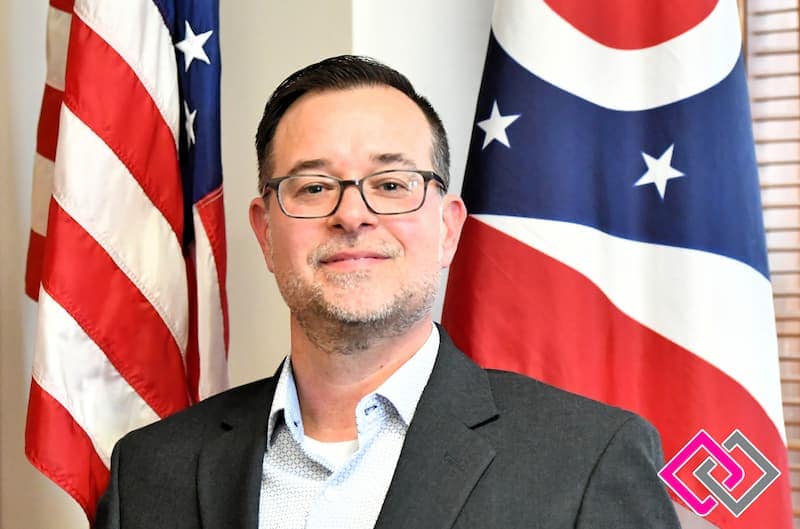
By: Darke County Commissioner Aaron Flatter
Every day, I work with businesses large and small across Darke County. Each one faces its own unique set of opportunities and challenges. Unfortunately, Congress is now considering legislation that would impose a one-size-fits-all framework on labor negotiations, and I am deeply concerned about the negative impact this could have.
The Faster Labor Contracts Act (H.R. 5408) is the kind of legislation that sounds reasonable from a distance and causes real problems up close.
As its name implies, the proposed law is intended to speed up contract negotiations, but it does so by imposing unworkably fast timelines and inserting bureaucracy into the process. Under the bill, bargaining must begin within ten days of a new union being formed, a mediator steps in if there is no agreement within 90 days, and if mediation fails, a government-appointed arbitration panel takes over and writes the contract themselves. Employers and workers are then stuck with whatever the mediator decides the contract should say.
For the businesses I work with, this would be unthinkable. A government-appointed panel setting wages and working conditions for a business it knows nothing about, in a county it has never visited, against a timeline designed in Washington, is not going to produce better agreements. I am concerned that, when carried out in the real world, the end result would be layoffs, cutbacks, and in some cases, closures.
That’s not a hypothetical concern, either. A Mercatus Center analysis of 147 studies spanning three decades found that when union contracts are driven by outside pressure rather than genuine negotiation, the results are slower job growth, reduced investment, and higher rates of layoffs. When businesses are backed into a corner and forced to accept terms they cannot realistically meet, workers end up paying the price. What looks like a win at the bargaining table can hollow out a workplace within a few years.
Businesses here in Darke County operate on tight margins. Their labor arrangements are built around local conditions and local costs. A federal arbitrator has no real way to account for any of that. The FLCA treats every workplace in America as interchangeable, and they are not.
It’s important to where this bill comes from. The FLCA is not a new idea. It is a provision pulled directly from the PRO Act, the sweeping labor overhaul that could not pass Congress for years because it could not attract genuine bipartisan support. This new bill is just an attempt to resurrect a piece of that larger, failed legislation.
Congressman Mike Carey represents communities like Darke County. I am asking him to look hard at whether this bill actually serves those communities, or whether it puts them at risk.
Aaron Flatter is a Darke County Commissioner and works for an electric contracting company serving businesses throughout western Ohio.