


GREENVILLE — What began as one of the most destructive days in recent Greenville history is becoming an opportunity to rebuild better.
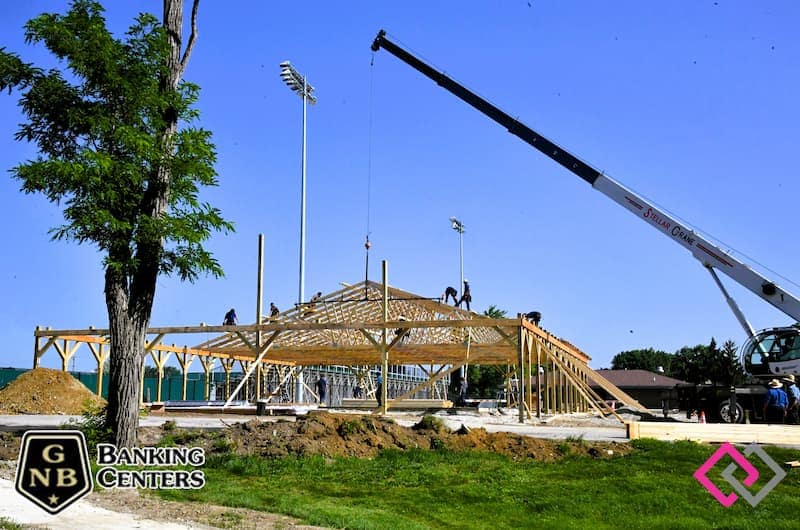
Construction is underway on a new covered shuffleboard complex in Greenville City Park, replacing facilities destroyed when a tornado ripped through the community the evening of May 7, 2024. The project represents another milestone in the city’s long recovery while creating a modern venue expected to attract tournaments and serve the community for years to come.
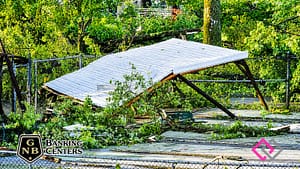
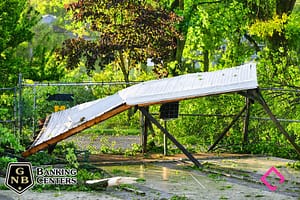
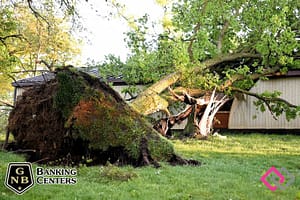
The original shuffleboard courts and three buildings were destroyed by the storm. At the time, Greenville was preparing to host a state shuffleboard tournament, but the event had to be relocated to another city and has not returned since.
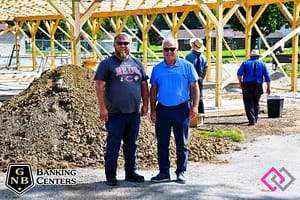
Now, crews are constructing a 66-by-80-foot building with a 10-foot ceiling over the courts.
“This will give the people who play shuffleboard a positive place to play shuffleboard,” Greenville Street Department Superintendent Matt Myers said. “They will be able to host more tournaments. This upgrade will be safer with the concrete being replaced. With the building, there will be shade, and down the road, it can be a multi-use building if we need it to be.”
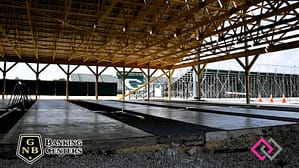
The new facility sits adjacent to Greenville Senior High School’s new Alumni Football Stadium and The Jennings Center Track & Field Complex. Myers said the building’s appearance was designed to complement the neighboring athletic facilities.
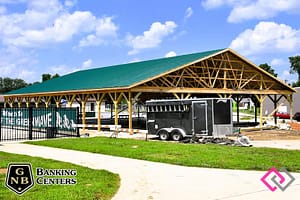
“We have taken some of the colors from the stadium and tried to incorporate them,” Myers said. “In the park, we try to stay with more neutral brown colors, but being this is so close to the stadium, we decided to make it match the stadium as much as we can, and that is what you will see from the road.”
City officials emphasized that Greenville taxpayers are not funding the project through the city’s general fund.
“No funds from the City of Greenville general fund are going to help fund the new shuffleboard building,” Mayor Jeff Whitaker said.
Instead, the project is being financed through a combination of insurance proceeds, federal disaster reimbursements, and state grant funding.
“There were three buildings on the old shuffleboard court that we did get insurance money for,” Myers said. “Moving forward, this is going to be a much better facility for everybody.”
“The money we are spending on this was insurance money that we have left over from all the damage in the park, and the Street Department’s labor that we got back from the State of Ohio through FEMA was put toward this project,” Myers said. “All the money we used for this project, along with a lot of the other shelter replacements, has come from either insurance dollars or reimbursements from FEMA.”
Additional funding came through a capital improvement grant secured with assistance from state Rep. Angie King, who represents Ohio’s 84th House District.
“We got a capital improvement grant for this building for $57,000 and another $28,000 for park improvements, which we’re hoping to put toward some upgraded playground equipment,” Myers said. “That will allow us to do the concrete and other needed items.”
The tornado also destroyed the park’s historic roundhouse shelter, which has since been repaired.
“The roundhouse was destroyed in the tornado, and it has been repaired,” Myers said. “It will be used this weekend for the 250 Celebration.”
For city leaders, the rebuilding effort represents more than replacing damaged structures. They say the recovery has strengthened Greenville while creating new amenities that likely would not have existed without the disaster.
“As most often happens across America, a local disaster pulls the community together with people helping people,” Myers said. “People helped clean up, and you look down the road after you’ve gone through the tough times and can see these much-needed improvements were a result of the tornado.”
Whitaker said the community’s response has been remarkable.
“Just the fact that it turned the community toward recovering from it,” Whitaker said. “In this section of the park, we have 40 new trees. In a few years, you will see a lot more shade out here, and that is a result of well over 100 donors.”
Myers said the storm also created an opportunity to modernize aging infrastructure that eventually would have required replacement.
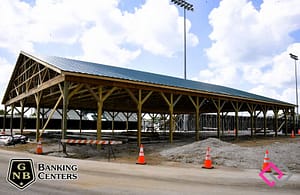
“There were a lot of things we were going to have to do anyway,” he said. “The electrical service was fed from the pool house and was overhead. A lot of that got destroyed when the tornado came through, so those were things we were already going to have to do. With the school replacing the destroyed football stadium, it moved a lot of things around, making it a little easier for us to do what we’re doing. We figured now is the time to do it, starting fresh and moving on from there.”
Whitaker believes the investment in Greenville City Park is also an investment in the city’s future.
“The city park is something that is going to attract younger families to come to Greenville,” Whitaker said. “This is what we need to focus on because our population has slightly dipped over the last couple of decades. We’re down to about 12,750 from 13,000, 10 or 11 years ago. If we are going to get younger families here, this is going to be quite the asset.”
He said the park now features a collection of recreational amenities that can help market Greenville as a destination for families and visitors.
“We have a wonderful pool, a brand-new football stadium, a recently new track and field stadium for our athletes,” Whitaker said. “This is one big complex here, and we can market it as such.”
Myers, a GHS alum who attends Greenville High School football games each season, said the improvements are already noticeable from the stadium.
From the stands, spectators now have a sweeping view of a city park that continues to emerge from one of Greenville’s darkest days, with new facilities replacing those lost and a renewed sense of community pride taking their place.