


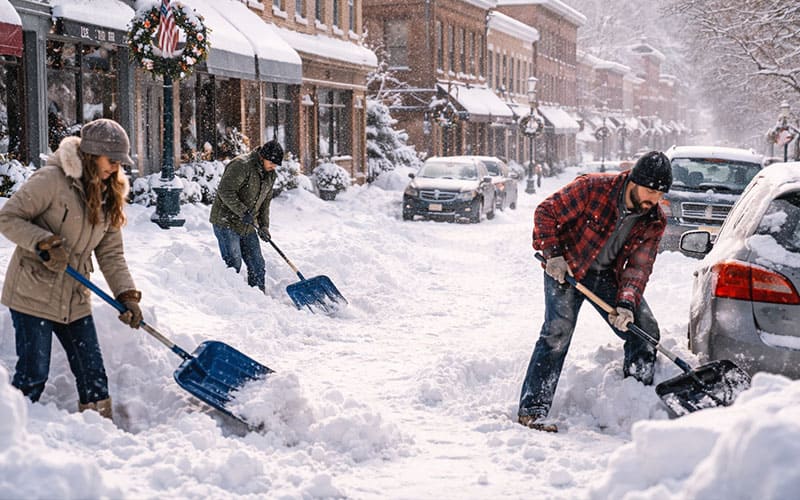
After most of central and southern Ohio felt the first real “punch” of snow, many community residence grabbed their shovels, cranked up their snow blowers and spread salt to make the roadways, sidewalks and other pathways clear and safe again.
The snow didn’t ask who you voted for, where you worked, or how long you’d lived on the street. It just came—quiet at first, then heavy—covering everything in a thick white stillness. And when morning arrived, so did the sound of neighbors helping neighbors.
Before the sun fully climbed over rooftops, porch lights flicked on. Doors opened. Shovels scraped against concrete. In driveways and along sidewalks, people bundled in mismatched gloves and old winter coats began digging out—not just their own cars, but anyone who needed a hand.
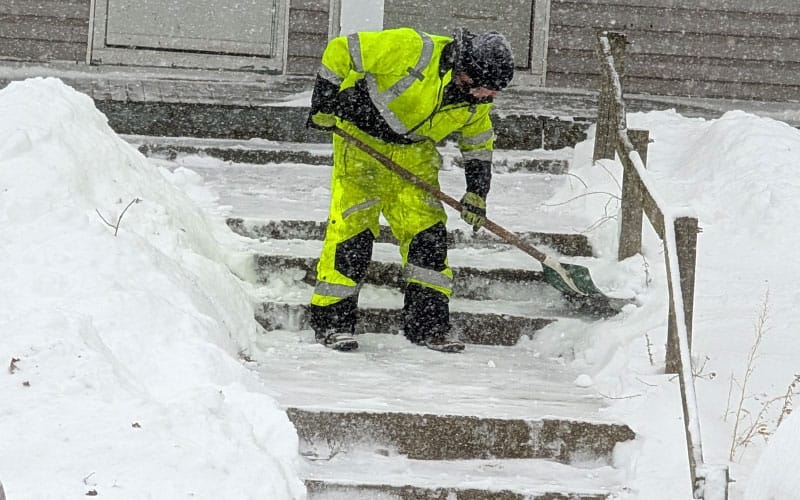
In places where sidewalks led to schools, churches, and corner stores, paths were carved wide enough for everyone. Hands numbed, backs ached, but people stayed out a little longer—just to make sure no one was left stuck or stranded.
By afternoon, the streets looked different. Not just clearer—but warmer somehow. The snowbanks stood tall, but so did the sense that this was more than just cleanup. It was community in motion.
When the last shovel was leaned against a garage wall and the last set of stairs made safe, people went back inside tired, sore, and smiling. The storm had passed, but it left something behind: proof that when winter shows its worst, neighbors show their best.
And in the quiet that followed, the town felt smaller—in the best possible way.