


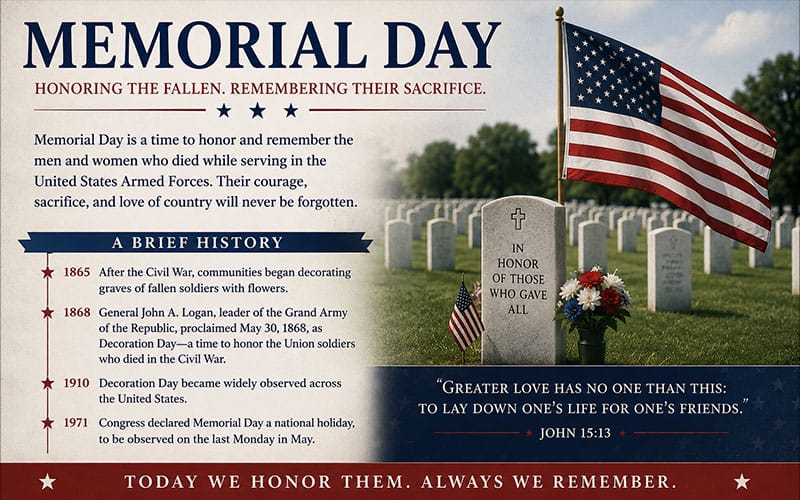
In the United States, Memorial Day is a federal holiday dedicated to honoring and remembering the men and women who died while serving in the U.S. military. It is observed on the last Monday in May each year and also marks the unofficial beginning of summer for many Americans.
Origins of Memorial Day
The holiday began after the American Civil War, which claimed more American lives than any other conflict in U.S. history. Communities across the country started holding tributes for fallen soldiers by decorating their graves with flowers and flags. Because of this tradition, the holiday was originally called “Decoration Day.”
One of the earliest large observances took place in 1868 when General John A. Logan, leader of a Union veterans organization, called for a nationwide day of remembrance on May 30.
Over time, the holiday expanded to honor all American military personnel who died in service, not just those lost during the Civil War. In 1971, Memorial Day officially became a federal holiday observed on the last Monday in May.
Meaning and Traditions
Memorial Day is a time of reflection, gratitude, and remembrance. Americans observe the day in several ways, including:
- Visiting cemeteries and memorials
- Placing flags or flowers on veterans’ graves
- Participating in parades and ceremonies
- Observing a National Moment of Remembrance at 3 p.m. local time
- Flying the American flag at half-staff until noon
The holiday reminds Americans of the sacrifices made by military service members who gave their lives protecting the nation and its freedoms.
Memorial Day vs. Veterans Day
People sometimes confuse Memorial Day with Veterans Day. The two holidays serve different purposes:
- Memorial Day honors those who died in military service.
- Veterans Day honors all who have served in the military, living or deceased.
Today, Memorial Day remains one of the nation’s most meaningful patriotic observances, blending remembrance, community traditions, and gratitude for those who made the ultimate sacrifice.