


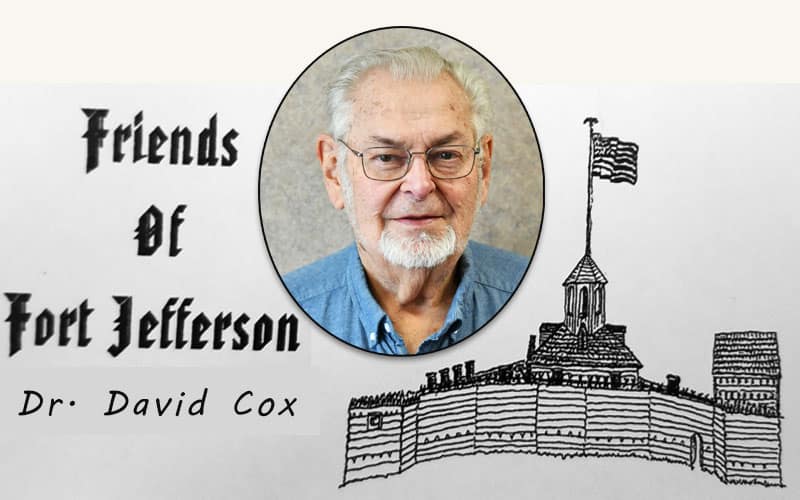
On 15 August 1792, Major David Strong wrote to General Wilkinson from Ft. Jefferson, “Since my last of the 9th, nothing worth has occurred. Yesterday morning, about 10 o’clock, a party of the enemy, who I suppose must have been in the neighborhood some time, suddenly fired upon a few of our people who were watering at our spring…but I am happy to inform you that without doing any mischief than slightly wounding one man of Capt. Kingsbury’s company in the thigh – as soon as they discharged their pieces, they betook themselves precipitately to flight…their object may have been the cattle-if so, I have hitherto and flatter myself I will be enabled totally to disappoint any attempts they may think proper to make.” Ed. Note: After this attack, a tunnel was dug from the fort to the spring and a springhouse was built around the spring to protect soldiers while retrieving water for the fort. Also, about this time, another well, 24 feet deep, was dug inside the fort.
On Sept. 5th, 1792, Maj. Strong’s account reported that at 5:00 A.M. Indians showed up at the #6 block house. “There were a few pieces discharged, and they soon disappeared.” A scouting party reported that about 15 Indians were seen later in the morning. Strong reports that the Indians are still seen around the neighborhood on Sept. 9th. Ed. Note: Sometimes, firing pieces referred to firing the fort cannons. Ft. Jefferson had a 6lb. iron cannon and a 51/2-inch howitzer. Recently, a group of “Friends of Fort Jefferson” did a metal detection survey north of the fort and have so far found about fifty 1” iron shots that were fired enclosed in a tin canister from the 6 lb. cannon set in the north-west bastion of the fort.
Sept. 29, 1792- Cattle guard attacked. “We had a cattle guard, a Sergt. &12 men, daily, went out to bait cattle. On the 29th, a little after sunrise, they went out with 11 cattle, got about three hundred yards from the fort, and were fired on by a party of Indians, supposed to be about twenty. Soldiers Kenman and Williams were killed. The remainder of the guard retreated to the garrison. The Indians took off six of the cattle & three days after, the cattle returned to the garrison.” Ed. Note: Baiting cattle probably meant feeding and corralling free-range cattle. It might be assumed that the cattle were turned loose by the Indians and returned on their own because they slowed the Indian’s escape, and they feared reprisal.
Attacks now slowed at Ft. Jefferson but increased on settlements along the Ohio River and supply routes between the other forts in the area. We will finish this series on Ft. Jefferson attacks in part 7 when we discuss a most notable attack on a supply train between Ft. St. Clair and Ft. Jefferson at the “forty-foot pitch” known as Lowery’s defeat.
Part 7 will end this series next week