


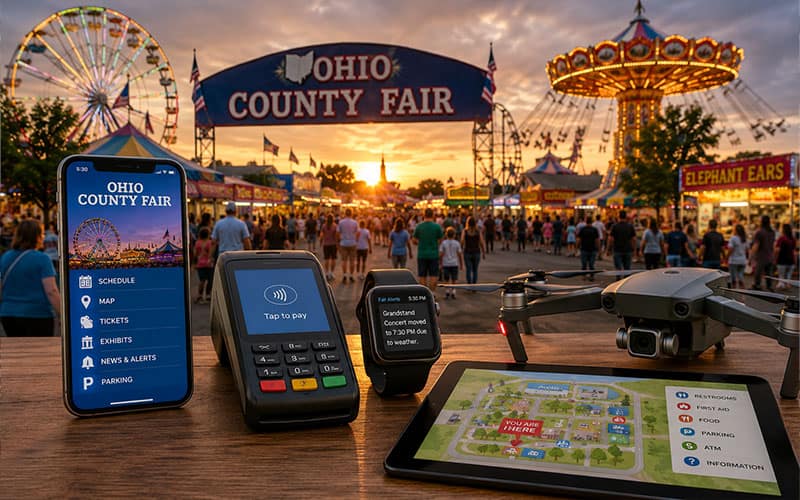
County fairs have long been an Ohio tradition, bringing together agriculture, entertainment, food, competitions and community. While many fair traditions remain the same, modern technology is changing how visitors experience these annual events.
One of the biggest changes is the use of smartphones. Fairgoers can use their phones to check schedules, find event information, take photos and share their experiences on social media. Fair organizations can also use websites and social media to quickly announce schedule changes, weather updates and other important information.
Digital ticketing and cashless payments are also becoming more common. Visitors may be able to purchase admission or event tickets online before arriving, while vendors can use mobile payment systems to accept credit cards and digital wallets.
Technology is also playing a growing role in agriculture. Today’s farmers use GPS-guided equipment, drones, sensors, automated feeding systems and other advanced tools. County fairs provide an opportunity for young people and adults to showcase agriculture while introducing visitors to some of the technology being used on modern farms.
Photography and video have changed the fair experience as well. Smartphones, digital cameras and drones can capture everything from livestock competitions to rides and concerts, allowing fair memories to be shared with thousands of people online almost instantly.
Technology can even improve fair safety. Digital communication, security cameras, weather monitoring and emergency notification systems can help organizers respond more quickly when problems arise.
Despite all these changes, technology hasn’t replaced what makes an Ohio county fair special. The livestock barns, midway rides, food stands, competitions and conversations with friends and neighbors remain at the heart of the experience.
Modern technology simply gives county fairs new ways to communicate, operate and connect with the community—helping an old Ohio tradition continue to thrive in a digital world.