


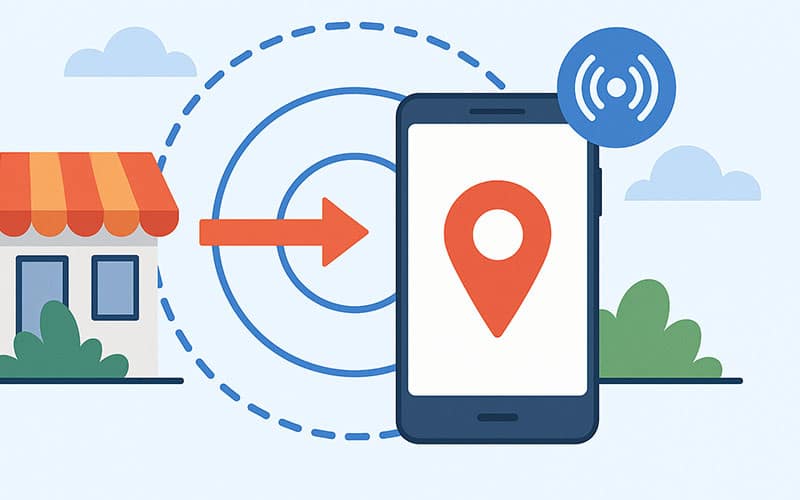
In today’s fast-paced digital world, businesses are constantly searching for smarter ways to reach customers. One of the most powerful tools in location-based marketing is geofencing — a technology that allows companies to target consumers based on their real-world location. But what exactly is geofencing, and how does it work?
Understanding Geofencing
Geofencing is a virtual boundary (or “fence”) set up around a specific geographic area using GPS, RFID, Wi-Fi, or cellular data. When a mobile device enters or leaves that area, it can trigger a response — such as sending a notification, displaying an ad, or recording a visit.
In simpler terms, it’s a way for businesses to interact with people in a defined area in real time.
For example:
-
A coffee shop could send a coupon to people walking within two blocks of its location.
-
A car dealership could track how many people pass by its lot each day.
-
A delivery company could automatically log when drivers enter or exit a customer’s property.
How Geofencing Works
Geofencing relies on location services built into smartphones and mobile apps. Here’s a step-by-step look at how it functions:
-
Define the Virtual Boundary
A business or developer creates a geofence using digital maps. The “fence” might cover a small radius (like 100 feet around a storefront) or a much larger area (like an entire neighborhood). -
Collect Location Data
When users have location permissions enabled on their devices or within an app, their GPS or Wi-Fi data can determine when they enter or exit the geofenced area. -
Trigger an Action
Once the system detects movement across the boundary, it can trigger specific actions — such as:-
Sending a push notification or text
-
Delivering a targeted ad
-
Tracking analytics data
-
Logging check-ins for security or attendance
-
-
Analyze the Results
Businesses can then use this data to refine marketing campaigns, measure foot traffic, or better understand customer behavior.
Uses of Geofencing
Geofencing isn’t just for marketing — it’s used across many industries:
-
Retail & Restaurants: Send promotions to nearby shoppers.
-
Real Estate: Alert potential buyers when they’re near listed properties.
-
Logistics: Track fleet movement and improve delivery efficiency.
-
Security: Monitor access to restricted areas.
-
Events: Engage attendees with real-time updates or offers.
Benefits of Geofencing
-
Highly Targeted Marketing: Reach potential customers when they’re most likely to act.
-
Increased Engagement: Personalized, location-based messages feel more relevant.
-
Better Data Insights: Businesses gain valuable information on consumer habits and mobility patterns.
-
Efficiency & Automation: Many actions — from attendance logs to ad triggers — happen automatically.
While geofencing offers major benefits, it’s crucial that businesses respect privacy laws. Users must give explicit permission to share their location data, and companies should be transparent about how that data is used.
Geofencing blends the digital and physical worlds, offering businesses a powerful way to connect with audiences in real time. When used responsibly, it can enhance marketing strategies, improve operational efficiency, and create more personalized customer experiences.