


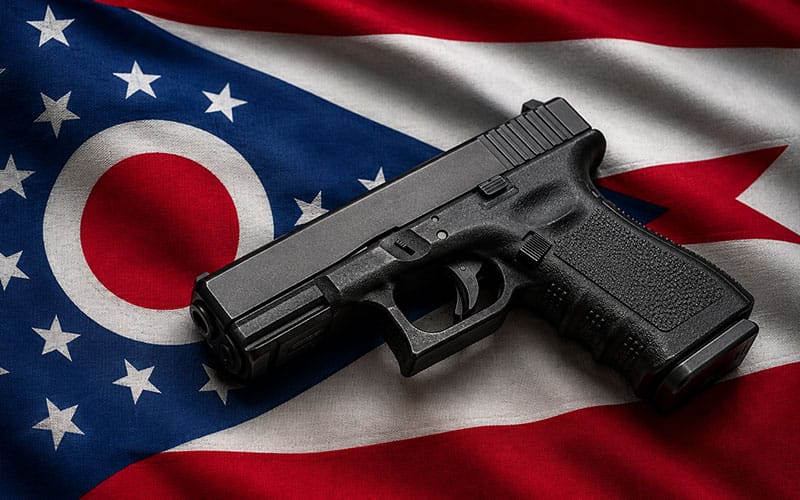
Ohio has some of the least restrictive firearm laws in the country, but gun owners are still responsible for understanding and following both state and federal regulations. Knowing the law can help protect your rights while promoting responsible firearm ownership.
One of the most significant changes to Ohio law occurred in June 2022 when the state adopted permitless carry, also known as constitutional carry. Adults who are at least 21 years old and are legally allowed to possess a firearm may carry a concealed handgun without first obtaining a concealed handgun license (CHL). While a permit is no longer required for many Ohioans, individuals who are prohibited from owning firearms under state or federal law cannot legally carry one.
Although a concealed handgun license is no longer required for concealed carry within Ohio, many residents still choose to obtain one. A CHL may provide benefits when traveling to other states that recognize Ohio’s permit through reciprocity agreements. Before traveling with a firearm, it is important to research the laws of each state you plan to visit.
Ohio law also outlines where firearms are generally prohibited. Certain locations, such as courthouses, police stations, correctional facilities, secure areas of airports, and many government buildings, have restrictions on carrying firearms. Federal law also prohibits firearms in certain locations, including federal buildings and other designated federal properties. Private property owners may also prohibit firearms on their premises by posting appropriate signage.
Ohio is a “Stand Your Ground” state. Under current law, a person who is lawfully present in a location generally has no duty to retreat before using force in self-defense if they reasonably believe it is necessary to prevent death or serious bodily harm. However, every self-defense situation is unique, and the use of deadly force remains subject to legal standards and judicial review.
When purchasing a firearm from a federally licensed firearms dealer, buyers must complete the required federal paperwork and pass a background check unless an applicable exemption exists under federal law. Private firearm transfers are generally governed differently than purchases from licensed dealers, but federal laws prohibiting firearm possession by certain individuals still apply.
Safe firearm storage is strongly encouraged, especially in homes with children or individuals who should not have access to firearms. Using a gun safe, lockbox, or trigger lock can help prevent theft, accidental injury, and unauthorized access.
Gun laws can change through legislation or court decisions. Anyone with questions about Ohio firearm laws should consult current state statutes, seek guidance from qualified legal counsel, or contact the appropriate law enforcement agency for clarification. Staying informed is one of the best ways to exercise firearm rights responsibly and safely.