


Telecommunications has transformed the way humans connect, share information, conduct business, and experience the world. From smoke signals and handwritten letters to smartphones and satellite internet, the evolution of telecommunications has shaped civilization itself. Over centuries, innovations in communication technology have steadily reduced the distance between people and accelerated the speed of information exchange.
Early Communication Methods
Before modern technology, humans relied on primitive forms of communication. Ancient civilizations used smoke signals, drums, bonfires, carrier pigeons, and messengers to send information over distances. These methods were limited by weather, geography, and the speed of travel.
Written communication became a major advancement. Civilizations such as the Egyptians, Greeks, and Romans developed systems for delivering written messages through organized courier networks. The Roman Empire established one of the earliest postal systems, allowing government officials to exchange information across vast territories.
For centuries, communication remained slow. Messages could take days, weeks, or even months to arrive depending on the distance.
The Telegraph Revolution
The true beginning of modern telecommunications arrived in the 19th century with the invention of the telegraph. Developed by inventors including Samuel Morse in the 1830s and 1840s, the telegraph allowed electrical signals to travel across wires almost instantly.
Morse Code became the standard language of telegraph communication, using dots and dashes to represent letters and numbers. For the first time in history, information could move faster than physical transportation.
Telegraph systems rapidly expanded across countries and continents. In 1866, the first successful transatlantic telegraph cable connected North America and Europe, dramatically changing global communication, commerce, and journalism.
The telegraph laid the foundation for all future telecommunications systems.
The Invention of the Telephone
In 1876, Alexander Graham Bell patented the telephone, forever changing communication. Unlike the telegraph, which transmitted coded messages, the telephone allowed people to hear each other’s voices in real time.
Telephone networks quickly spread throughout cities and rural communities. Operators manually connected calls using switchboards before automated systems were introduced in the early 20th century.
Telephones transformed businesses, government operations, emergency services, and personal relationships. By the mid-1900s, landline telephones became a standard feature in homes across much of the world.
Radio and Wireless Communication
At the end of the 19th century, inventors such as Guglielmo Marconi pioneered radio communication. Wireless technology eliminated the need for physical wires, making long-distance communication more flexible and efficient.
Radio became a major source of news, entertainment, and military communication during the early 20th century. Families gathered around radios to hear music, sports broadcasts, and world events.
Wireless communication played a crucial role during both World Wars, helping military forces coordinate operations over long distances.
Radio technology also paved the way for future wireless innovations including television, satellites, cellular networks, and Wi-Fi.
The Rise of Television
Television emerged in the 20th century as another major telecommunications breakthrough. By combining audio and visual transmission, television changed entertainment, advertising, and news delivery.
Television broadcasting expanded rapidly after World War II. Families could now watch live events from around the world, creating shared cultural experiences on a massive scale.
Color television, cable networks, satellite broadcasting, and eventually digital television dramatically improved viewing quality and expanded programming choices.
Television became one of the most influential communication technologies in modern history.
Satellites and Global Communication
The launch of communication satellites during the Space Age revolutionized international telecommunications. Satellites allowed signals to travel globally without relying entirely on undersea cables or ground infrastructure.
Satellite communication improved international telephone service, television broadcasting, military operations, weather forecasting, and navigation systems.
The launch of satellites such as Telstar marked the beginning of near-instant global communication.
Today, satellite technology supports GPS navigation, internet access in remote regions, and worldwide live broadcasts.
The Computer and Internet Era
The development of computers in the mid-20th century introduced digital communication. In the 1960s and 1970s, early computer networks allowed researchers and government agencies to share information electronically.
The birth of the internet transformed telecommunications forever. Originally developed from ARPANET, the internet expanded rapidly during the 1990s and early 2000s.
Email replaced many traditional letters. Websites became global sources of information. Businesses moved online, and instant messaging allowed people to communicate instantly across continents.
The introduction of broadband internet dramatically increased data speeds, enabling video streaming, online gaming, social media, and cloud computing.
Today, billions of people rely on the internet daily for communication, education, banking, healthcare, entertainment, and work.
The Mobile Phone Revolution
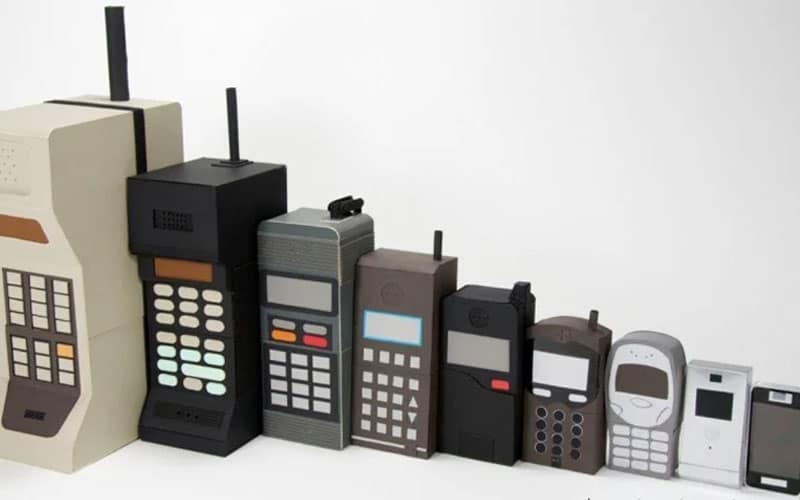
Mobile telecommunications changed society even further. Early mobile phones in the 1980s were bulky and expensive, primarily used by businesses and wealthy consumers.
As cellular networks expanded and technology improved, mobile phones became smaller, cheaper, and more accessible. Text messaging became popular in the 1990s.
The introduction of smartphones in the 2000s combined phones, computers, cameras, GPS systems, and internet connectivity into a single device. Companies such as Apple and Samsung helped drive the smartphone revolution.
Modern smartphones allow video calls, social networking, online shopping, streaming media, and instant global communication from nearly anywhere.
Fiber Optics and High-Speed Networks
Fiber optic technology dramatically improved telecommunications infrastructure. Instead of transmitting electrical signals through copper wires, fiber optic cables use light signals traveling through glass fibers.
Fiber optics provide extremely high speeds, lower signal loss, and increased reliability. They support modern internet services, cloud computing, video conferencing, and massive data transfers.
Today’s telecommunications networks rely heavily on fiber optic infrastructure to handle growing global internet traffic.
Social Media and Digital Communication
The rise of social media platforms transformed communication into an instant, global experience. Platforms such as Meta, X Corp., and TikTok allow billions of users to share information, photos, videos, and live broadcasts instantly.
Communication is now faster and more interactive than ever before. Businesses use digital communication for marketing and customer service, while news organizations distribute information instantly across multiple platforms.
Social media has also influenced politics, culture, entertainment, and journalism worldwide.
5G, Artificial Intelligence, and the Future
Modern telecommunications continues evolving rapidly with technologies such as 5G wireless networks, artificial intelligence, virtual reality, and the Internet of Things (IoT).
5G networks provide faster speeds, lower latency, and support for billions of connected devices. AI-powered communication systems improve customer service, translation, automation, and cybersecurity.
Emerging technologies may soon include:
- Advanced holographic communication
- Fully autonomous smart cities
- Expanded satellite internet coverage
- Brain-computer interfaces
- Quantum communication systems
Telecommunications is increasingly becoming the backbone of the digital economy and modern society.