


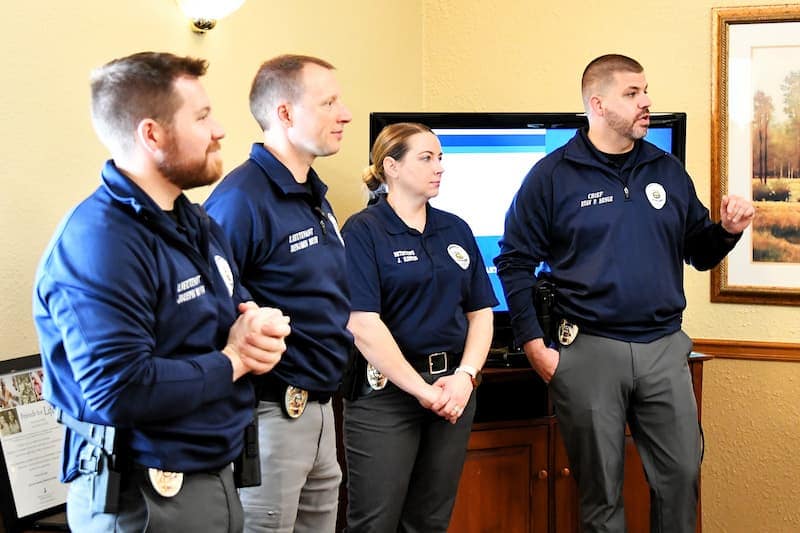
GREENVILLE — The Greenville Police Department, under the direction of Chief Ryan Benge, recently hosted a “Coffee with the Cops” event at Brookdale Senior Living to educate residents about the growing number of scams targeting senior citizens.
“We hate to see crimes against senior citizens,” said Chief Benge. “We want to protect them, and we want to find ways to get the information out.”
Brookdale staff contacted the department after noticing an increase in scam-related concerns among residents, prompting officers to provide guidance and answer questions during an informal gathering.
Across the United States, scams aimed at older adults continue to rise at an alarming rate. Law enforcement agencies and consumer protection groups report that Americans aged 60 and older lose billions of dollars annually to fraud through impersonation schemes, investment scams, and tech-support fraud. Officials note the true losses are likely even higher because many incidents go unreported.
“Assisted living scams — and it’s not just senior citizens — affect people of all ages,” Benge explained. “If we can bring that information out before a crime starts, we can get in front of it. These cases are very difficult to prosecute, almost impossible at times, because they’re often committed through computers and require federal involvement.”
Scammers are also becoming more sophisticated, using artificial intelligence, cloned voices, and highly convincing digital communications to trick victims into sending money or sharing personal information.
“For these cases to get prosecuted, you often have to go through federal routes,” Benge added, noting that the Ohio Attorney General’s Office provides resources, but investigations remain challenging. “This isn’t something we can sit out on the street and look for. Getting out into the community and sharing information is a good first step.”
Local and regional agencies continue to see steady increases in complaints involving older residents. Common schemes include callers posing as government officials, bank representatives, or even family members in distress who urgently request wire transfers or gift card payments. Romance scams and fraudulent investment opportunities also frequently target seniors who may live alone or seek companionship online.
Authorities say scammers often single out older adults because they may have retirement savings, own their homes, or be less familiar with rapidly changing technology. Criminals frequently rely on emotional manipulation — creating urgency, issuing threats, or invoking loved ones — to pressure victims into quick decisions.
Beyond financial loss, the emotional impact can be severe. Victims may experience embarrassment, anxiety, depression, and a loss of independence, which can discourage them from reporting the crime or seeking help.
Consumer advocates emphasize that prevention begins with awareness. Seniors and their families are encouraged to slow down when faced with urgent financial requests, verify the identity of anyone asking for money, and avoid payment methods such as gift cards, cryptocurrency, or wire transfers — all common tools used by scammers.
Officials also urge families to discuss scams openly and report suspicious activity to local law enforcement or federal consumer protection agencies. Increased reporting helps authorities track fraud trends and warn others before more victims are targeted.
As fraud tactics continue to evolve, community education and communication remain the strongest defenses against older adults becoming victims.