



GETTYSBURG, Pa. — For historian and author William Styple, preserving Civil War history means making sure the men who experienced it still have a voice.
Darke County veterans had an opportunity to hear about that work during a stop at Gettysburg National Military Park’s Museum and Visitor Center, part of Darke County Veterans Services’ annual four-day trip to Washington, D.C.
The Gettysburg visit offers the group a recurring opportunity to meet Styple at the museum bookstore, where he talks with visitors and signs purchased copies of his books.
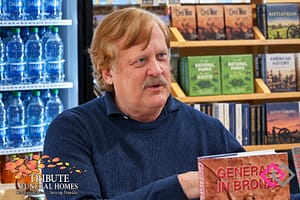
Styple, who said he has written about 20 books, has spent decades searching letters, manuscripts, and other historical records for accounts that reveal the people behind the battles.
“Research is the fun. Writing is the chore,” Styple said.
His work includes “Generals in Bronze: Interviewing the Commanders of the Civil War,” published in 2005, and the 2022 biography “General Philip Kearny: A Very God of War.” His career also has included documentary work, including the series “Echoes of the Blue & Gray,” which he co-wrote with the late historian Brian Pohanka using motion-picture footage of Civil War veterans.
Styple said he moved to Gettysburg about nine years ago from Kearny, New Jersey, a community named for Union Gen. Philip Kearny. His interest in the war began long before that move.
Growing up in a town with a history of caring for Civil War veterans helped make the conflict feel close, he said. Older residents remembered men who had fought in the war, connecting his childhood to a generation whose experiences would become the focus of his research.
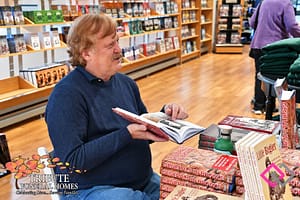
That interest eventually produced an extensive biography of the general whose name his hometown carries. The Abraham Lincoln Book Shop described the Kearny biography as the culmination of 50 years of research.
Another major undertaking began with the papers of artist and sculptor James E. Kelly, whose conversations with Union commanders preserved details of their wartime experiences.
Kelly interviewed more than 40 Union generals while working to portray them in art. Styple located Kelly’s papers at the New-York Historical Society in 2003, finding notebooks filled with interviews that became the foundation for “Generals in Bronze.”
Styple said transcribing the handwritten interview notes required two years of full-time work.
The reward, he said, was finding candid recollections that sometimes differed from the accounts commanders had offered in their published memoirs. The conversations gave readers another way to examine decisions and personalities that shaped the war.
For Styple, those discoveries illustrate why returning to original documents matters. A handwritten note or overlooked interview can add information that generations of readers have never encountered.
His latest project takes that same approach beyond commanders’ recollections to the letters of soldiers writing from the front lines.
Styple said he has collected about 5,000 wartime letters and is sharing them through a YouTube project, posting a new selection each week. The videos, generally 10 to 15 minutes long, present accounts written while the war’s outcome remained uncertain.
“They don’t know who’s going to win. They don’t know if they’re going to live,” he said.
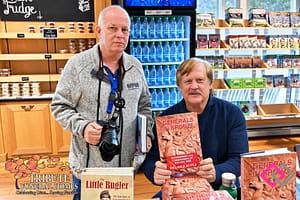
A central source is the New York Sunday Mercury, a newspaper that encouraged soldiers to submit accounts of their experiences in exchange for a free newspaper, Styple said.
“Soldiers love free newspapers,” he said.
Their responses created a record of the conflict as it unfolded, describing battles and military life before later events could shape their memories.
Styple previously explored that material in “Writing and Fighting the Civil War: Soldier Correspondence to the New York Sunday Mercury,” published in 2000.
The video project gives him another way to share a collection too large to include in a single practical volume, he said. His goal is to follow the war week by week through the experiences of those fighting it.
The broader collection includes Union and Confederate accounts, sometimes written by soldiers who had been positioned only a short distance from one another, Styple said.
What interests him is the immediacy of their observations. A soldier describing Fredericksburg within hours of the fighting offers a different perspective from someone recalling the same battle decades later.
Styple also researches the letter writers themselves, seeking to explain who they were and what happened to them.
“So then what I wanted to know: Did the soldiers survive the war?” he said.
By following their lives beyond the letters, he hopes to help viewers understand the individuals behind the accounts — including those who returned home and those who did not.
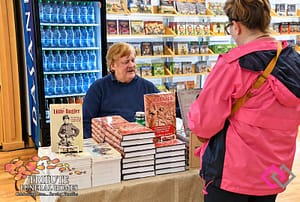
Styple said viewers interested in signed copies of his books can find contact information through his YouTube channel and email him.
While his books and videos reach today’s readers and viewers, he said he also thinks about an audience far beyond the present.
“I’m thinking about the people 100 years from now that are not born yet that are going to want to watch this program,” Styple said.
Preserving the letters, identifying their authors, and making their words accessible are all part of that effort.
“They’re writing about it in real time,” he said, “and so it’s really a unique history.”