


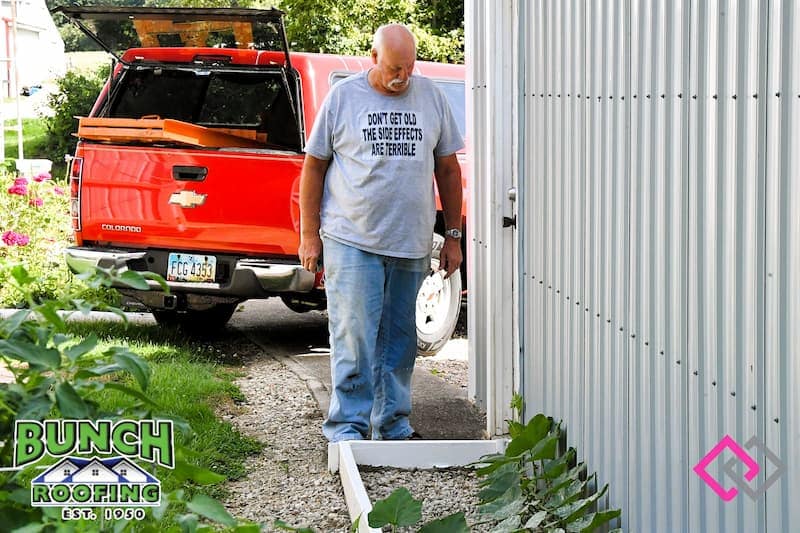
GREENVILLE — A butternut squash vine growing at Galen Ullery’s home along state Route 571 West has stretched approximately 30 feet — and it is not finished growing.
Ullery said the vine recently grew 13 inches in three days, an average of more than 4 inches per day.
“It’s about 30 feet, and it’s growing about 4 inches a day,” Ullery said. “It’s not done growing yet.”
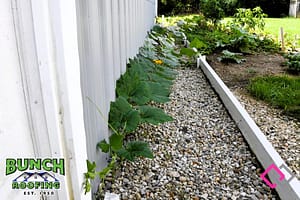
Although Ullery has maintained gardens for years, he said he has never grown a butternut squash vine this long.
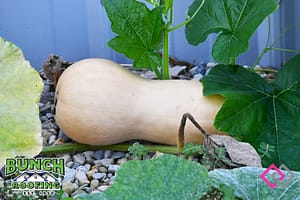
“This is just a little spot back here, and it must be pretty good dirt,” Ullery said. “I’ve never had one here before, but it only has one squash on it.”
The plant’s lone squash will eventually make its way from the garden to the Ullery family’s dinner table. Ullery said his wife, Darla, prepares it similarly to candied sweet potatoes.
“She puts it in a dish and bakes it,” he said. “It’s delicious.”

Gardening is a shared interest at the Ullery home, with each tending to a favorite part of the property.
“I like my garden. That’s what we do — we garden,” Ullery said. “Darla likes the flowers, and I take care of the garden.”
Ullery gets seeds from various sources, though he said most come from Berne, Indiana.
Butternut is a winter squash known for its tan skin, orange flesh, and sweet, nutty flavor. Its thick rind lets a mature squash store longer than thin-skinned summer varieties.
Charles Leggett of Stow, Massachusetts, developed the modern butternut squash in the 1940s. Leggett crossed a gooseneck squash with other varieties while seeking a smaller, more manageable alternative to the large Hubbard squash. His creation reportedly received its name because it was smooth as butter and sweet as a nut.
Researchers took the squash to the Waltham Field Station of the Massachusetts College of Agriculture, now the University of Massachusetts Amherst, where they later developed the widely grown Waltham butternut variety.
Although the modern butternut is relatively new, squash has a much longer history. Indigenous peoples cultivated squash in the Americas for thousands of years before European settlement. Today, butternut remains a popular choice for soups, casseroles, roasted vegetable dishes and baked desserts.
For Ullery, however, watching the unusually long vine continue its journey across the garden is part of the enjoyment.
“It’s not done growing yet,” he said.