


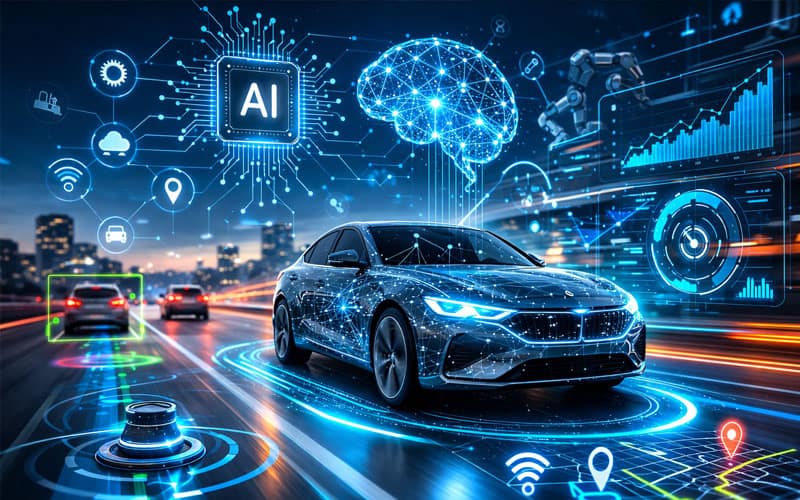
Artificial intelligence is quickly moving from science fiction to the driver’s seat of modern vehicles. The newest cars arriving in 2025 and 2026 aren’t just faster or more fuel-efficient—they’re smarter. From AI copilots that talk to you like a passenger to vehicles that can drive themselves on certain highways, the automotive industry is entering a new era of “intelligent mobility.”
For drivers, the result is a safer, more personalized, and increasingly automated driving experience.
Smarter Driver Assistance Systems
The most widespread use of AI today is in Advanced Driver Assistance Systems (ADAS). These systems rely on cameras, radar, and machine-learning software to analyze traffic conditions and assist drivers in real time.
Common AI-powered features now include:
-
Adaptive cruise control that adjusts speed automatically
-
Lane-keeping assist that gently steers the vehicle
-
Automatic emergency braking that reacts faster than humans
-
Traffic-jam assist for stop-and-go highway driving
Some of the newest systems can even predict potential collisions by analyzing traffic patterns seconds before a human driver would react.
Hands-Free Highway Driving
Several automakers are now offering hands-free driving technology on mapped highways. For example, systems like GM’s Super Cruise allow drivers to travel long stretches of highway without touching the steering wheel while the vehicle maintains speed, lane position, and safe following distance.
These systems still require drivers to remain alert, but they represent a major step toward the next stage of automation.
Experts classify automation levels from Level 0 (no automation) to Level 5 (fully self-driving). Most vehicles today operate around Level 2 or Level 2+, where AI assists but humans remain responsible.
Cars That Talk Back
One of the newest trends is conversational AI inside the vehicle.
Instead of pushing buttons or memorizing commands, drivers can simply talk to their cars naturally. New systems powered by large language models allow drivers to say things like:
-
“Find the closest gas station.”
-
“Adjust the temperature.”
-
“What restaurants are near my destination?”
Some manufacturers are even developing AI assistants capable of holding full conversations and offering trip suggestions or travel information.
AI That Learns Your Driving Habits
Another emerging feature is personalized driving profiles.
Modern vehicles collect data about driver behavior—how aggressively you accelerate, your typical routes, and even climate control preferences. Over time, AI systems learn these habits and automatically adjust settings to match your driving style.
For example, a vehicle might:
-
Pre-cool or warm the cabin before your morning commute
-
Suggest alternate routes based on traffic patterns
-
Adjust suspension and steering response for your preferred driving style
Predictive Maintenance
AI also helps drivers maintain their vehicles before problems occur.
By analyzing engine performance, sensor data, and driving habits, intelligent systems can detect issues early and recommend service before a breakdown happens.
Instead of a warning light appearing after damage occurs, the vehicle may alert the driver weeks in advance that a component needs attention.
The Road Toward Autonomous Vehicles
The ultimate goal of automotive AI is fully autonomous vehicles—cars capable of handling all driving tasks without human intervention.
While full autonomy is still several years away for everyday consumer vehicles, major technology companies and automakers are investing heavily in AI platforms that allow cars to “see,” reason, and make complex decisions on the road.
Experts expect gradual progress over the next decade as safety testing, regulations, and real-world driving data continue to evolve.
The Bottom Line
Artificial intelligence is rapidly transforming vehicles from machines we control into smart companions that assist, learn, and eventually may drive themselves.
For today’s drivers, that means:
-
safer roads
-
smarter navigation
-
less stressful commutes
-
and vehicles that feel more like personal technology than transportation.
The steering wheel may still be in our hands—for now—but the intelligence behind the dashboard is growing more powerful every year.